June 27, 2024 • Knowledge, Business
April 4, 2025 • Business, Case Study • by Yutaka Tokunaga
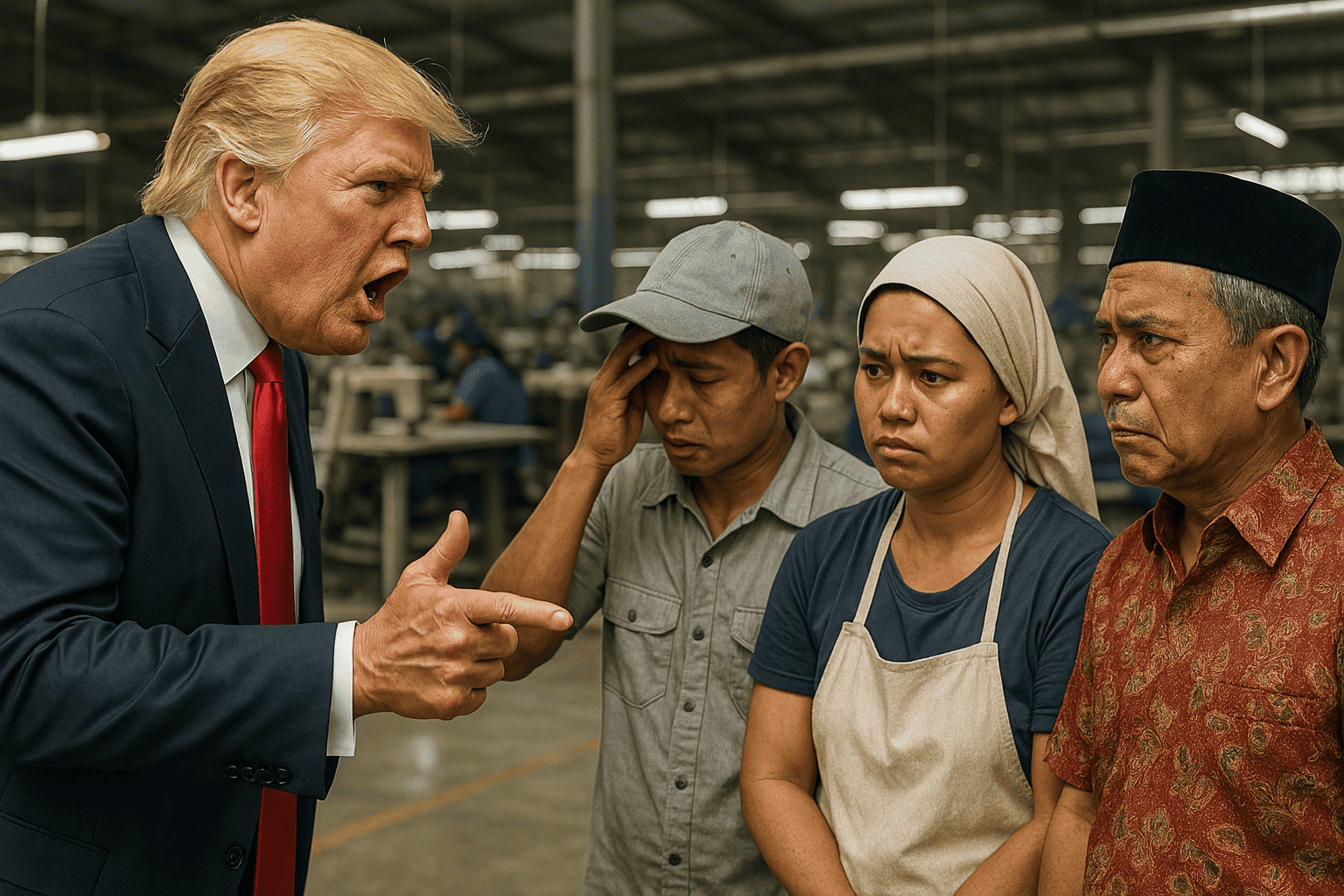
Table of Contents
What Are Trump’s Reciprocal Tariffs and What Is Their Purpose?
In April 2025, President Donald Trump launched a sweeping economic maneuver under the banner “Make America Rich Again.” At its core lies a disruptive trade policy: a universal 10% baseline tariff and the aggressive Reciprocal Tariff system.
Often referred to as the “Liberation Day” policy, this “tit-for-tat” tax ensures that any nation imposing high duties on American goods will face equivalent barriers in the U.S. market. President Trump bluntly stated, “America will no longer be a victim,” signaling a clear end to the era of unrestricted market access for foreign manufacturers.
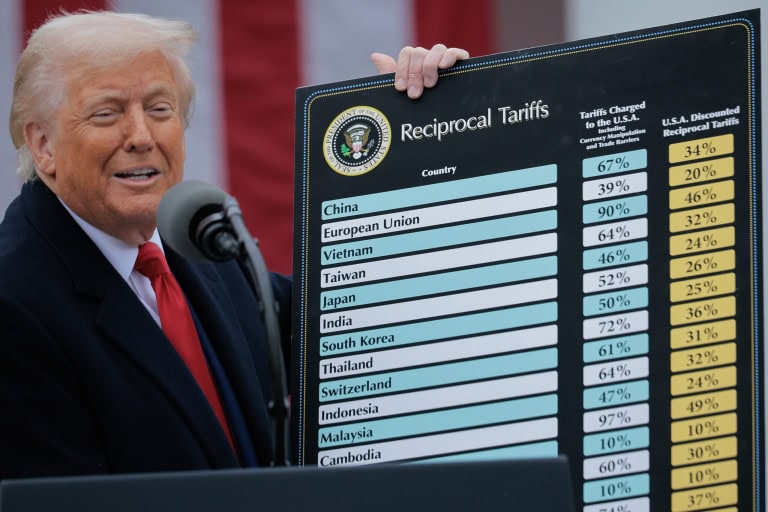
The new tariff regime has triggered a “Full-Scale Trade War,” hitting America’s largest partners with varying severity:
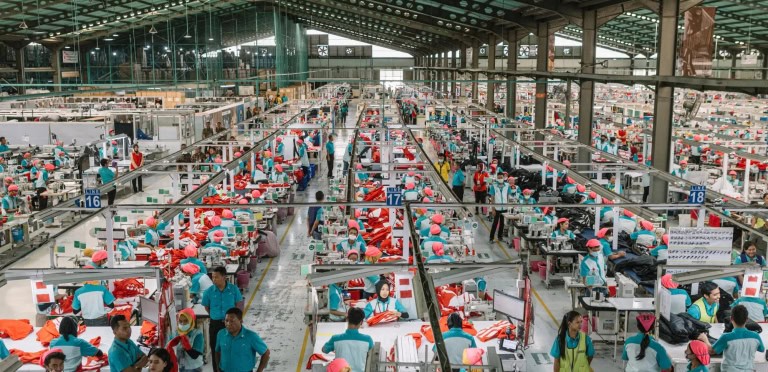
The Trump administration initially categorized Indonesia as one of the “Bad Countries” (often cited alongside nations with significant trade surpluses like China and Vietnam). As a result, Indonesia was slapped with a cumulative 32% tariff. For Indonesian exporters, this represents a catastrophic increase in operational costs and a severe blow to their competitive edge in the U.S. market.
The United States has long been Indonesia’s second-largest export destination, with a trade value reaching $23.25 billion in 2023. Beyond direct trade, Indonesia serves as a vital subcontractor in the global supply chains of giants like Nike and Honda.
The 32% tariff directly threatens Indonesia’s core industrial pillars (based on 2023 data):
Indonesia’s manufacturing giants operate primarily on an OEM (Original Equipment Manufacturer) basis, producing goods for global brands. A double-digit tariff hike makes their business model practically unviable. Key companies affected include:
Indonesia has long been a “cog” in the manufacturing machinery of the U.S., Japan, and China. However, the rising cost of “Made in Indonesia” goods is accelerating a dangerous shift toward:
The “Trump Shock” triggered an immediate capital flight from emerging markets. The Indonesian Rupiah (IDR) has faced extreme pressure:
With exports contributing significantly to the national budget, the cumulative effect of these tariffs is a projected slowdown in growth.
In the face of these aggressive trade barriers, the Indonesian government has opted for “Quiet Diplomacy” over retaliation. Coordinating Minister for Economic Affairs, Airlangga Hartarto, emphasized that maintaining long-term bilateral trade relations and investment stability is paramount.
As of early 2026, this diplomatic approach has yielded a significant breakthrough. Following a direct dialogue between President Prabowo Subianto and President Donald Trump, Indonesia successfully negotiated its reciprocal tariff down from the initial 32% to 19%. This reduction, finalized in February 2026, came with substantial commitments:
Global Trends 2026: Protectionism and Supply Chain Overhaul
The world is moving toward Economic Nationalism (Protectionism). Nations are increasingly realizing that over-dependence on global supply chains creates strategic vulnerabilities. We are now witnessing three major shifts:
With the rapid advancement of AI and Robotics, developed nations like the U.S. no longer require vast pools of low-cost manual labor. “Light-out factories” (fully automated plants) allow for:
As Western markets become more restrictive, major global players are shifting their focus:
The global trade landscape in 2026 is no longer about “free trade,” but about strategic survival. For Indonesia, the path forward is divided into four potential scenarios, each with its own set of risks and rewards.
| Scenario | Overview | Impact on Indonesia |
| 1. Trade War Escalation | A “tit-for-tat” spiral where major economies retaliate with ever-higher tariffs. | Severe: Export collapse, GDP growth dipping into the 4% range, and “imported inflation.” |
| 2. Strategic Compromise | Nations secure lower tariffs through political and economic concessions. | Moderate: Indonesia successfully negotiated a 19% rate (down from 32%) through a landmark 2025/2026 deal. |
| 3. Supply Chain Overhaul | Global firms move production back to the U.S. (Reshoring) using AI and robotics. | High Risk: Indonesia loses its “low-cost labor” edge; potential mass layoffs in the textile and electronics sectors. |
| 4. BRICS+ Alignment | Strengthening ties with non-Western blocs to reduce USD dependence. | Strategic Opportunity: Since joining BRICS in January 2025, Indonesia has new paths for “De-dollarization.” |
As the global pendulum swings toward Economic Nationalism (Protectionism), nations like Indonesia—which have traditionally played the role of “the world’s subcontractor”—must fundamentally rethink their economic identity.
The era of relying solely on low-cost labor is being rendered obsolete by Western automation and aggressive reciprocal tariffs. To thrive in this new world order, Indonesia is rapidly accelerating a strategic shift toward:
Indonesia is no longer just a place where things are made for others; it is becoming a nation that creates its own value. The transition from a “labor-dependent” economy to a “value-driven” powerhouse is no longer a choice—it is a necessity for national survival.
As 2026 unfolds, the world’s eyes will be on Jakarta to see if it can successfully navigate this multipolar era and emerge as a new leader in the global economy.
For business in Indonesia, choose Timedoor, celebrating its 10th anniversary.
System development, IT education services, Japanese language education and personnel dispatch services, business expansion support services.

some other blog posts you might be interested in