April 15, 2025 • Berita
January 18, 2025 • Berita • by Yutaka Tokunaga
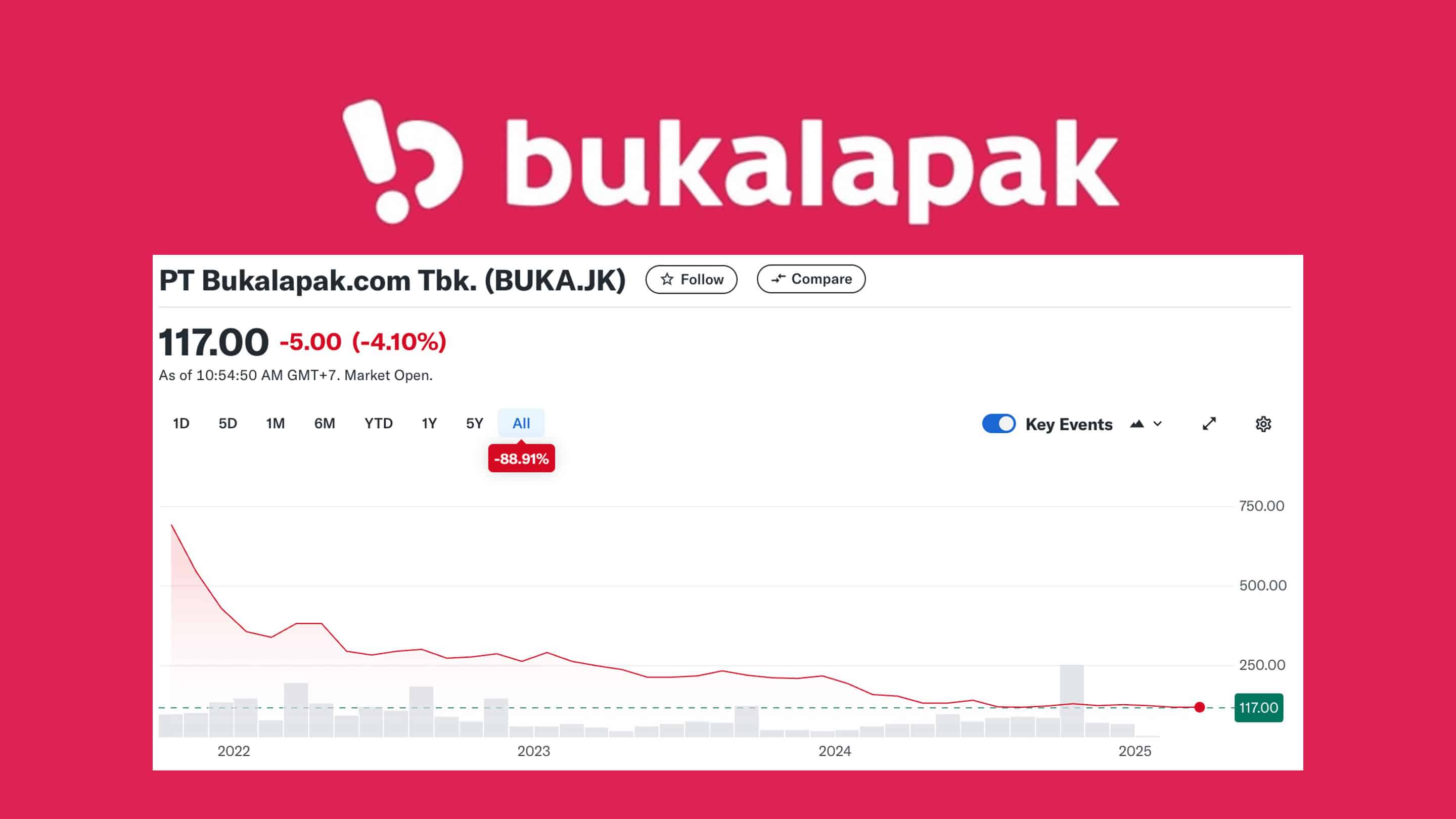
Table of Contents
Bukalapak was once one of Indonesia’s most admired startups and a symbol of national pride. The company quickly rose from unicorn status to a public listing, backed by multiple rounds of significant funding. However, fierce competition caused Bukalapak’s performance to falter, and its stock price continued to decline. In this article, we explore Bukalapak’s journey and reflect on the broader Indonesian startup landscape.
Indonesia’s e-commerce company Bukalapak once stood out as a shining “unicorn” in Southeast Asia’s startup scene. The company digitized small local shops and traditional markets (warungs), providing an online platform for transactions. This rapid growth earned Bukalapak widespread acclaim as a “savior of the local economy.”
In August 2021, Bukalapak held its IPO, raising approximately $1.5 billion (around 170 billion yen), marking one of the largest public offerings in Indonesia. At that time, the company seemed poised to solidify its status as a nationally celebrated enterprise.
However, this success was short-lived. Facing ongoing poor performance, in January 2025 Bukalapak announced it would shut down its traditional marketplace operations and focus exclusively on selling virtual products. This move highlighted the company’s fundamental challenges and demonstrated how a former unicorn could quickly lose its former luster.

Before its IPO, Bukalapak received massive funding from venture capitalists and major investors, crafting an image of a rapidly growing tech company. However, questions arose about whether the company’s valuation had been inflated.
A key concern was the lack of transparency in its revenue model and actual growth potential. Bukalapak promoted a socially responsible image by supporting local SMEs, but in reality, many transactions had low profit margins, suggesting an unsustainable business structure. The IPO team faced criticism for prioritizing short-term fundraising over clearly defining the company’s long-term vision.
After its IPO, Bukalapak’s stock dropped 6.76% in just three days, hitting the trading floor limit. This early decline reflected the market’s initial disappointment with the company’s performance.
Even more striking, within five months, the company’s valuation fell from approximately $7.6 billion to under $2.6 billion, losing over 66% of its value in just a few months. This was a major shock for investors.
The decline was driven by sluggish revenue growth, intensifying competition, and internal management issues. Losing market confidence made it increasingly difficult for Bukalapak to recover.

Achmad Zaky, co-founder and Bukalapak’s first CEO, resigned in January 2020. The departure of a long-time leader disrupted internal consistency and trust. Such leadership turmoil also raised investor concerns.
Rachmat Kaimuddin, who led Bukalapak’s IPO, stepped down as CEO in December 2021, just months after the company went public. His resignation sparked speculation that he was held accountable for the company’s inability to tackle post-IPO challenges, creating waves of concern both internally and externally.

Founder Spotlight: Achmad Zaky
The stock price collapse and a series of leadership resignations created major concerns for investors. Those who participated in Bukalapak’s IPO faced significant short-term losses, leading to a loss of confidence in the company. This event also had a noticeable effect on the Indonesian startup ecosystem as a whole.
Some observers noted, “Bukalapak’s failure demonstrates that investing in startups does not guarantee success,” encouraging investors to adopt a more cautious approach when funding startups in Indonesia.
Bukalapak’s story highlights the risks and challenges that startups face. An excessive focus on short-term fundraising without a sustainable growth strategy contributed to the company’s downfall.
This case serves as an important lesson for Indonesia’s startup market, reminding investors and companies alike of the importance of assessing a company’s true value. Bukalapak’s collapse prompts reflection on what real success means for a business and underscores the necessity of careful decision-making and long-term vision in shaping the future of the startup ecosystem.
For business in Indonesia, choose Timedoor, celebrating its 10th anniversary.
System development, IT education services, Japanese language education and personnel dispatch services, business expansion support services.

Looking for E-commerce MobileApp for your Retail business? Learn more on APPMU
some other blog posts you might be interested in