April 11, 2025 • Berita • by Erika Okada
A Comprehensive Guide to Indonesia’s Energy Business: Market Trends, Policies, and Investment Opportunities
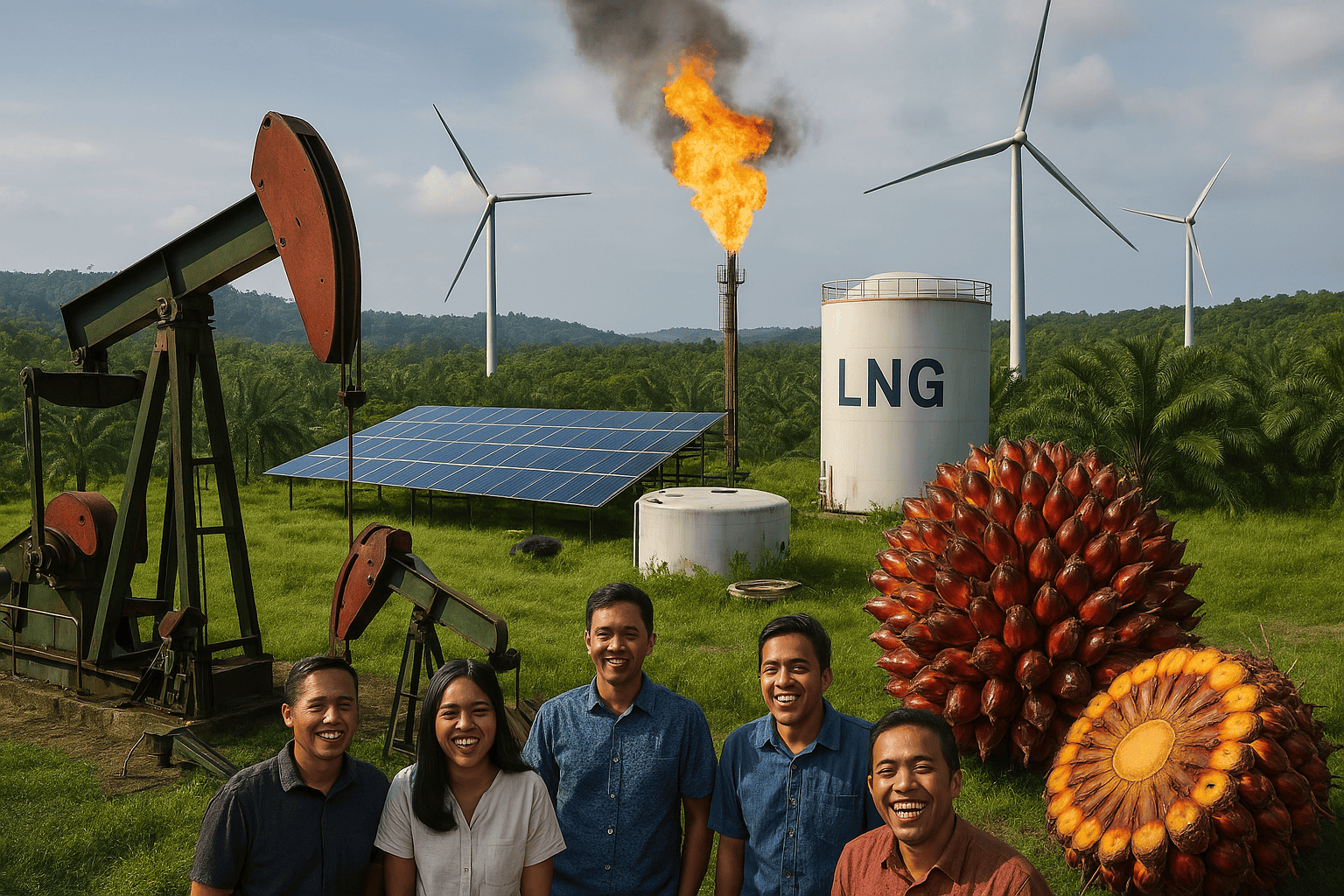
Table of Contents
Indonesia is the largest market in Southeast Asia, with a population of more than 280 million people. As the economy continues to grow, energy demand in Indonesia is rising rapidly, especially for electricity and fuel.
At the same time, the Indonesian government faces a dual challenge. It must ensure stable energy supply while also addressing climate change and sustainability goals. To achieve this balance, the government has introduced various policies and regulations across the energy sector.
This article is written for Japanese and Western executives, managers, and business leaders who are already operating in Indonesia or planning to enter the market. It offers a clear and practical overview of Indonesia’s energy business landscape, covering renewable energy, oil and gas, power infrastructure, government policies and incentives, as well as market entry opportunities and competitive conditions.
Overview of Indonesia’s Energy Market

Indonesia’s energy supply still relies heavily on fossil fuels. In 2023, the primary energy mix shows that coal and oil dominate the market.
Coal accounts for approximately 40.5% of total energy supply, followed by oil at around 30.2%. Natural gas contributes about 16.3%, while renewable energy (Energi Baru Terbarukan/EBT) remains at 13.1%.
The Indonesian government aims to increase the share of renewable energy to 23% by 2025. However, as of 2023, the share only reached 17.9%. The Ministry of Energy and Mineral Resources (ESDM) acknowledges that further measures are needed to achieve this target.
Fossil Fuel Dependence: Background and Current Situation
Indonesia’s high dependence on fossil fuels is closely linked to its status as a resource-rich country, especially in coal.
In 2023, Indonesia produced 775 million tons of coal, a 12.8% increase from the previous year, setting a historical record. Around two-thirds of this total, or 518 million tons, were exported.
Domestic coal consumption reached 213 million tons, exceeding the government’s Domestic Market Obligation (DMO) target of 177 million tons.
In contrast, oil production has declined since the 2000s. Current crude oil output is about 600,000 barrels per day, while domestic demand reaches around 1.6 million barrels per day. This results in heavy reliance on imports.
Natural gas production remains stable at around 6 billion cubic feet per day. However, long-term production increases are required to meet rising demand.
Electricity Demand and Supply Conditions
Electricity demand in Indonesia continues to grow every year. In 2023, per capita electricity consumption reached 1,337 kWh, up 14% from the previous year.
According to PLN, total national electricity supply in 2023 was around 323,300 GWh. Of this, about 57% was generated by PLN-owned power plants, mostly coal-fired, while 43% came from Independent Power Producers (IPP).
For years, Indonesia’s power sector has experienced oversupply. However, the gap between supply and demand is gradually narrowing. In the Java–Bali grid, reserve capacity decreased from 7 GW at the end of 2022 to 4 GW at the end of 2023.
The government expects oversupply to decline in the near future. Still, excess capacity remains a factor that makes PLN cautious in integrating new renewable energy plants, requiring careful attention.
Renewable Energy (Solar, Wind, Geothermal) in Indonesia: Current Status

The Indonesian government has made renewable energy (Energi Baru Terbarukan/EBT) a central pillar of its energy policy. As mentioned earlier, the energy mix target aims for 23% renewable energy by 2025, and various measures are being implemented to achieve this goal.
However, progress is still behind target. As of 2023, the cumulative installed capacity of renewable energy was about 13,155 MW (13.2 GW).
Installed Capacity by Renewable Energy Type
Looking at the breakdown:
-
Hydropower: 6,784 MW (about 52% of total capacity)
-
Biomass: 3,195 MW (24%)
-
Geothermal: 2,418 MW (18%)
-
Solar PV: 573.8 MW
-
Wind: 154.3 MW
Solar and wind power are still in the early stages of large-scale deployment.
Solar Power: New Developments and Challenges
A bright spot is Southeast Asia’s largest solar power plant, the Cirata Floating Mega Solar (192 MW), which began operations in November 2023. This project is Indonesia’s first large-scale floating solar power plant, jointly developed by a PLN subsidiary and a company from the United Arab Emirates (UAE).
The government is also promoting the “Rooftop Solar (PLTS Atap)” program for residential use, targeting 3.6 GW of cumulative rooftop solar installations by 2025.
However, adoption remains limited due to grid capacity constraints and insufficient feed-in mechanisms. Under current oversupply conditions, PLN is cautious about adding new renewable power sources.
Geothermal Energy: Potential and Current Status
Geothermal power is a renewable energy sector where Indonesia has particularly high potential. Located along the Pacific Ring of Fire, Indonesia has the world’s second-largest geothermal resource, with an estimated total potential of about 29 GW.
Currently, about 2.4 GW of geothermal capacity has been developed. Major projects are being carried out by Pertamina Geothermal Energy (PGE), a subsidiary of state-owned Pertamina, as well as domestic and international joint ventures. Japanese companies are also actively involved through technology provision and investment.
Biomass and Waste-to-Energy
Biomass and waste-to-energy projects are progressing through partnerships between local governments and private companies. Co-firing of biomass (wood pellets) in coal-fired power plants is also actively promoted by the government.
Market Opportunities for Foreign Companies
Opportunities for foreign investment in renewable energy are expected to expand. The government has secured about $20 billion from advanced countries under the Just Energy Transition Partnership (JETP).
These funds will support early retirement of coal power plants, grid expansion, and accelerated renewable energy deployment.
Despite challenges in grid integration and infrastructure, there are growing opportunities across Indonesia, especially for:
-
Electrification of remote islands
-
Replacing diesel generators with renewable energy
These trends create new business opportunities for international companies.
Trends in Indonesia’s Oil & Gas Industry
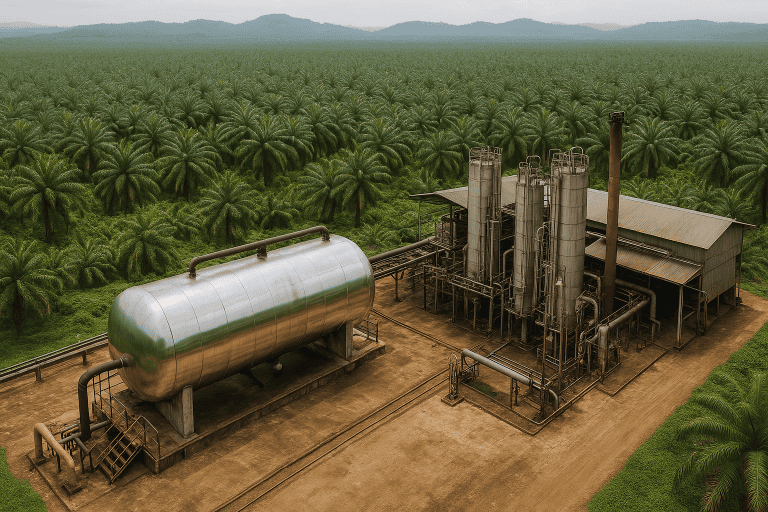
Indonesia’s crude oil production has been declining for years. Although the country was an OPEC member in the 1990s, it is now a net oil importer.
This growing dependence on imports has significant effects on the trade balance and government finances, making energy security a key concern.
Crude Oil Demand and Upstream Investment Needs
The government and the upstream regulator, SKK Migas (Special Task Force for Upstream Oil and Gas Activities), previously set a target of 1 million barrels per day (bpd) of crude oil by 2030.
However, mature oil fields and stagnating exploration have made this target difficult to achieve. By 2025, the goal may be revised downward to around 800,000–900,000 bpd.
In reality, oil production has steadily declined:
-
2020: 708,000 bpd
-
2021: 659,000 bpd
-
2022: 612,000 bpd
-
2023: 606,000 bpd
By mid-2024, production reportedly fell temporarily to 578,000 bpd.
To boost output, the government is implementing Enhanced Oil Recovery (EOR) in existing fields and providing stronger incentives for new exploration.
Domestic Oil Demand and Import Gap
Domestic oil demand grows at several percent annually, driven by economic growth and vehicle ownership. In 2023, Indonesia consumed around 1.6 million bpd, mainly gasoline and diesel—about three times domestic production.
This gap makes Indonesia’s fuel import bill reach several billion USD annually, contributing to the trade deficit.
Refinery Upgrades and Biofuel Initiatives
To improve fuel self-sufficiency, state-owned Pertamina is leading large-scale refinery projects, including RDMP and GRR plans. International companies, including Japanese firms, participate with technology and investment.
Biofuel usage is also being promoted. In 2023, the palm oil-based biodiesel blending ratio increased from B30 to B35, substituting 35% of diesel with bio-based fuel. This B35 policy simultaneously reduces imports and supports the domestic palm oil industry.
Opportunities for Foreign Companies in Upstream Oil
The upstream oil sector is open to foreign investment. Indonesia uses a Production Sharing Contract (PSC) system, where contractors share a portion of produced oil and gas with the government.
Recently, Indonesia introduced the Gross Split PSC, allowing more flexible contract terms. The Ministry of Energy conducts annual international bidding for exploration blocks, aiming to offer 60 blocks by 2025.
Major oil companies like Chevron and Shell have exited some large blocks, while Pertamina and other international firms have acquired interests.
Examples include:
-
Pertamina taking over Rokan Oil Field from Chevron (formerly Indonesia’s largest onshore field)
-
Pertamina acquiring Mahakam Block from France’s Total
Although domestic companies are gaining prominence, foreign expertise and capital remain essential for large-scale new discoveries, creating ample collaboration opportunities.
Downstream Market Liberalization
In the downstream sector (product sales and retail), Pertamina held a long-standing monopoly. Recently, partial liberalization allowed foreign oil companies to enter the fuel retail market.
-
Shell, BP, Total operate gas stations mainly in urban areas.
-
Since subsidized fuels are supplied via Pertamina, foreign companies focus on non-subsidized high-octane fuels.
Thus, while retail distribution opportunities exist, market players must navigate price regulations and subsidy policies.
Indonesia’s Natural Gas: Stable Production and New Projects

Natural gas is a key pillar of Indonesia’s energy sector, with approximately 60% of production consumed domestically, while the remainder is exported as LNG (Liquefied Natural Gas) or pipeline gas.
In recent years, the export ratio has declined due to growing domestic demand for power generation and industrial use, yet Indonesia remains one of the world’s leading LNG exporters.
In 2023, gas production was about 5.96 billion cubic feet per day (BSCFD) and remained relatively stable. The government has set a 2030 target of 12 BSCFD, placing high expectations on the development of new gas fields.
Key Production Regions and New Projects
The main gas production regions are:
-
East Kalimantan
-
Papua
-
South Sumatra
-
Offshore Natuna
Notable recent projects include:
-
Tangguh LNG Train 3 in Papua, which started production at the end of 2023, increasing LNG output by 3.8 million tons per year.
-
Development plans for the large Masela block are also advancing.
Domestic Gas Utilization Policies and Business Opportunities
To promote domestic gas usage, the government has implemented:
-
Lower gas tariffs for industrial users
-
Construction of small-scale LNG receiving facilities for power plants and city gas supply
-
Expansion of the gas pipeline network in accessible areas
In remote islands and regions where pipelines cannot reach, “virtual pipeline” businesses are growing, with examples of Japanese companies providing technology support.
For foreign investors, Indonesia’s gas sector offers opportunities not only in upstream (exploration and development) but also in midstream and downstream (transportation, distribution, and LNG). The government encourages the expansion of gas usage through regulatory relaxation and investment incentives, creating significant opportunities for collaboration.
Indonesia Government Policies and Incentives in the Energy Sector

Energy Policy Directions
The Indonesian government has formulated the National Energy Policy (KEN) and the National Energy General Plan (RUEN) as the top-level frameworks for its energy sector. Under Government Regulation No. 79/2014 (PP 79/2014), the focus is on balancing energy self-sufficiency with sustainability, with targets such as a 23% renewable energy share in the energy mix by 2025 and achieving carbon neutrality by 2060.
For the electricity sector, PLN publishes the Long-Term Electricity Supply Plan (RUPTL). The latest RUPTL emphasizes that more than half of the new power capacity in the coming years will come from renewable energy, a strategy referred to as the “Green RUPTL”, marking a turning point in limiting new coal-fired power plants.
The government has generally suspended permits for new coal-fired power plants, except for existing contracts or captive power for industrial use. Presidential Regulation No. 112/2022 (Perpres 112/2022), issued in 2022, explicitly encourages renewable energy adoption while restricting new coal investment. It also establishes various incentives for renewable energy developers, forming the legal basis for the tax incentives discussed below. International support, such as the Just Energy Transition Partnership (JETP) signed in 2022, further aids Indonesia’s shift away from coal dependence.
However, the legislation for ambitious renewable energy promotion has been delayed. The long-discussed New Energy and Renewable Energy Bill (RUU EBET) has not been passed due to inter-ministerial disagreements over provisions such as power wheeling, and its approval has been deferred until after the 2024 government and parliamentary transition. While this legal uncertainty poses risks to private investors, the government maintains that existing regulations are sufficient to implement necessary measures, even in the absence of a law. For instance:
-
Feed-in tariffs for renewable energy are set based on Perpres 112/2022, providing clear PLN purchasing conditions.
-
Geothermal development is supported by a separate geothermal law, simplifying permits and offering exploration risk mitigation by government-led preliminary exploration.
Climate Change Measures (Carbon Pricing)
Indonesia is also moving forward with carbon pricing measures, including carbon tax and emission trading schemes. The carbon tax law was enacted in 2021, but its implementation has been repeatedly postponed to mitigate economic impact. The current plan sets the carbon tax to start in 2025, at a low level of approximately $2 per ton of CO₂ (Rp30/kgCO2e).
Meanwhile, a voluntary emissions trading system started in 2023. Led by the Financial Services Authority (OJK), the Carbon Exchange began operations in September 2023, and by February 2025, trading volume reached 1.578 million tons of CO₂, with a transaction value of Rp 772.5 billion, showing gradual market formation. Carbon credits from emission reduction projects could become a new revenue source, benefiting renewable energy developers.
Tax Incentives and Other Incentive Programs
The Indonesian government has established various tax incentives and support schemes to attract investment in the energy sector. Renewable energy projects are considered priority sectors, with incentives including:
-
Corporate Tax Benefits: Renewable energy projects may qualify for tax allowances (income deductions) or tax holidays (up to 20 years). Large-scale projects may receive zero percent tax rates for extended periods.
-
Import Duty and VAT Exemptions: Equipment and components for power generation, such as solar panels and wind turbines, benefit from duty and VAT exemptions, enabling low-cost procurement.
-
Property Tax Reductions: Land and building taxes (PBB) for power plants may be reduced. Geothermal exploration areas may receive PBB exemptions during early exploration, lowering upfront investment costs.
-
Subsidies and Loan Guarantees: Geothermal projects can access government grants and debt guarantee schemes. Renewable energy developers may also use PPA fulfillment guarantees from the state-owned Infrastructure Guarantee Fund (IIGF) and low-interest loans from state banks.
For the upstream oil and gas sector, exemptions on export/import duties and VAT are standard for PSC contractors, along with tax holiday incentives for large projects. The Ministry of Industry and Investment Coordinating Board (BKPM) offers fast-tracked permits and administrative support for strategic national projects. Recent implementation of the online single submission (OSS) system has also reduced licensing timelines for power projects.
Overall, Indonesia provides generous investment incentives in energy compared to many other countries. Proper use of these incentives can shorten payback periods and reduce risks, though compliance requirements and procedures can be complex. Engaging local experts and staying updated with regulations is critical for investors entering the market.
Conclusion
Indonesia is experiencing rapidly growing energy demand, prompting the government to strengthen policies that promote renewable energy and reduce reliance on fossil fuels. Despite the country’s continued dependence on coal, oil, and natural gas, the government has set ambitious targets: achieving a 23% renewable energy share by 2025 and carbon neutrality by 2060.
In the renewable energy sector, hydropower, biomass, and geothermal remain the core sources, while solar and wind power are beginning to be introduced on a larger scale. In the oil and gas industry, collaboration with foreign companies is active, offering business opportunities across exploration, development, and retail sectors.
Additionally, the government has implemented tax incentives, financing support, and subsidies to attract energy investments. These measures create a favorable market environment for foreign investors, particularly those aiming to participate in Indonesia’s energy transition.
However, some policy frameworks and regulatory implementations remain uncertain, making thorough information gathering and cooperation with local experts essential for investors entering the market. Moving forward, monitoring the progress of energy transition and developing sustainable, practical business models will be key to long-term success.
For business in Indonesia, choose Timedoor, celebrating its 10th anniversary.
System development, IT education services, Japanese language education and personnel dispatch services, business expansion support services.

Looking for E-commerce MobileApp for your Retail business? Learn more on APPMU
Energy Glossary
-
Primary Energy Source: Energy obtained directly from nature, e.g., coal, oil, and hydro energy.
-
Renewable Energy (EBT): Energy sources that are inexhaustible, such as solar, wind, geothermal, and biomass.
-
DMO (Domestic Market Obligation): Obligation to supply a certain amount of resources to the domestic market.
-
PLN (Perusahaan Listrik Negara): Indonesia’s state-owned electricity company.
-
IPP (Independent Power Producer): Private independent electricity producer.
-
Geothermal Power: Electricity generation using heat energy from the earth.
-
JETP (Just Energy Transition Partnership): International framework where developed countries support energy transition in developing countries.
-
PSC (Production Sharing Contract): Contract scheme where government and company share production output.
-
Gross Split PSC: Type of PSC that gives more discretion to the company compared to traditional PSC.
-
RUPTL (Long-Term Electricity Supply Business Plan): Indonesia’s national electricity infrastructure plan by PLN.
-
Carbon Pricing: Policy that assigns a price to carbon emissions via taxes or trading to encourage reductions.
-
Tax Holiday: Corporate tax exemption for a certain period.
-
OSS (Online Single Submission): Online licensing system implemented by the Indonesian government to simplify administrative procedures.
Frequently Asked Questions (FAQ) on Energy Business in Indonesia
Q1. How to start an energy business in Indonesia?
A1. Obtain a business license via OSS (Online Single Submission). For electricity or renewable energy projects, PLN agreements and permits from the Ministry of Energy and Mineral Resources (ESDM) may also be required.
Q2. Can Japanese companies enter the renewable energy sector?
A2. Yes. Key opportunities exist in geothermal, solar power, and grid development, where Japanese technology is highly valued.
Q3. What are the requirements for investment incentives?
A3. Incentives like tax holidays or VAT exemptions apply to priority projects, depending on scale, location, and technology. Confirm details with BKPM or relevant ministries.
Q4. When will the Renewable Energy Bill (RUU EBET) be enacted?
A4. As of early 2025, RUU EBET has not been enacted. Meanwhile, implementation follows existing government and ministerial regulations.
Q5. Why is the oil & gas sector attractive for foreign investors?
A5. Flexible upstream exploration, results-based PSC contracts, and tax/equipment incentives make market entry easier.


