
March 30, 2025 • Knowledge, Business
March 28, 2025 • Berita, Business • by Yutaka Tokunaga
Table of Contents
“Delayed again?” “The check-in line is endless.” “My luggage arrived damaged.” “The cabin crew is so cold.”
If you have ever flown on a Lion Air domestic flight in Indonesia, chances are you’ve experienced at least one of these frustrations. On review sites and social media, complaints about Lion Air are a daily occurrence. Yet, despite the constant backlash, Lion Air remains the undisputed king of the Indonesian skies.
It is the largest airline in the country, boasting a massive market share that leaves competitors in the dust. But how does a business thrive on what many consider the “worst hospitality”?
In this article, we dive deep into why Lion Air continues to succeed as a business despite its poor reputation—and the strategic reasons behind this survival that might seem baffling to those used to higher service standards.
For the average Indonesian traveler, the price of a flight ticket is the single most important factor. Lion Air operates as an Ultra Low-Cost Carrier (ULCC), consistently offering fares that are significantly lower than any other competitor.
Affordability over Amenities: In a price-sensitive market, the ability to fly cheaply is a value in itself. Passengers are willing to trade comfort and service for a seat that fits their budget.
Cost vs. Time: Especially for residents of regional cities with lower average incomes, the philosophy isn’t “Time is Money,” but rather “Cost is more important than time.” This deep-rooted cultural and economic reality justifies Lion Air’s business model. As long as they remain the cheapest option, they will continue to dominate the Indonesian skies, regardless of service quality.
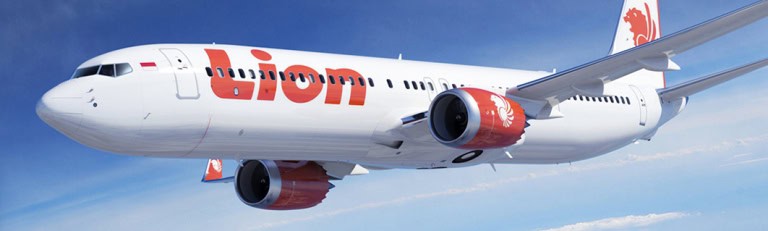
The Lion Air Group boasts an unparalleled network, covering nearly every island and regional city across the Indonesian archipelago. By strategically utilizing its sister brands—Wings Air, Batik Air, and Super Air Jet—they have built a comprehensive ecosystem that connects even the most remote areas.
The Only Way to Fly: Lion Air often operates on routes that other airlines simply don’t serve. For many travelers, it isn’t a matter of choosing Lion Air; it’s a matter of Lion Air being the only option.
Connecting the Hinterlands: If you are traveling to a small town in Sulawesi or the remote interior of Kalimantan, you will likely find yourself on a Lion Air Group aircraft. This “monopoly of convenience” in rural areas makes them an indispensable part of Indonesia’s national infrastructure.
While Indonesia does have other airlines like Garuda Indonesia, Citilink, and AirAsia, they rarely pose a direct threat to Lion Air’s market share due to several structural factors:
Garuda Indonesia: Known as the national flag carrier with excellent service, but its premium pricing is far beyond the reach of the average citizen.
AirAsia: While popular for its low fares, its domestic network in Indonesia is quite limited compared to its international presence.
Citilink: As the low-cost subsidiary of Garuda, it offers better service than Lion Air, but its flight frequencies are lower, and it covers fewer destinations.
Because of this, many passengers find themselves in a situation where “they must choose Lion Air, even if they are unhappy.” In the world of Indonesian aviation, Lion Air has effectively turned lack of choice into a winning business strategy.
Lion Air operates a massive fleet of over 200 aircraft. The company is world-renowned for its aggressive expansion strategy, famously placing some of the largest single orders in aviation history with both Boeing and Airbus.
The Power of Bulk Purchasing: Their strategy is simple yet effective: Massive Procurement → Drastic Cost Reduction → Passing Savings to the Consumer.
An Unbeatable Pricing Edge: By purchasing planes, parts, and maintenance services in such high volumes, Lion Air achieves a cost structure that smaller competitors simply cannot replicate. This massive scale allows them to maintain rock-bottom ticket prices that remain the primary draw for the Indonesian public.
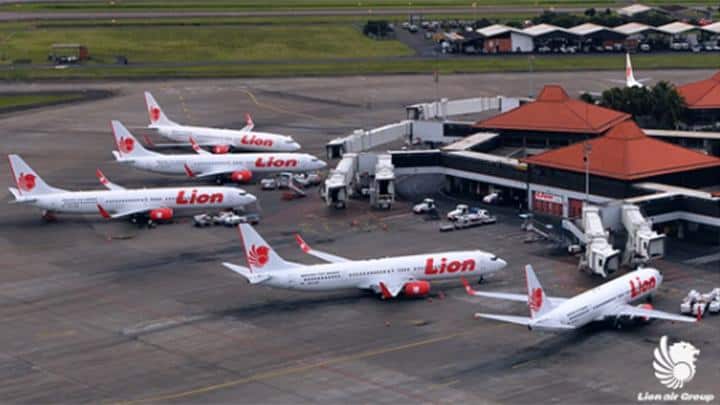
Lion Air does not try to be everything to everyone. They intentionally ignore the luxury and business-class segments, focusing instead on a very specific demographic that prioritizes budget over bells and whistles.
Their primary target audience includes:
Migrant Workers (TKI): Millions of workers traveling for employment.
Students: Budget-conscious youth moving between islands for education.
Large Families: For whom a slight price difference per ticket adds up to massive savings.
Budget Travelers: Backpackers and locals looking for the cheapest way from A to B.
Resilience as a Strategy: These groups are generally more resilient and willing to tolerate minor delays or lack of hospitality in exchange for a seat. By specializing in this “price-first” niche, Lion Air has been able to achieve massive growth without the need to invest heavily in high-end service quality.
In countries like Japan, a complaint is often viewed as a “legitimate claim for one’s rights.” However, in Indonesia, the social dynamic is quite different. The lack of accountability is sustained by a specific cultural mindset and a relaxed regulatory environment.
The “Pasrah” Mindset: Many passengers tend to accept service failures with a sense of resignation. It is common to hear people say, “Well, it’s Lion Air, what do you expect?” or attribute delays to “God’s will” (Takdir). This acceptance prevents the kind of mass consumer backlash that would force a company to change.
Lack of Regulatory Pressure: Historically, government oversight and penalties for domestic airlines in Indonesia have been relatively lenient. Without strict enforcement or heavy fines for delays and poor service, the company lacks a strong financial motive to prioritize customer satisfaction.
The Lion Air Group dominates the aviation market by segmenting its brands according to different customer demographics and price points. This multi-brand approach allows them to secure a massive market share while avoiding internal competition.
| Brand Name | Target Audience | Key Features |
| Lion Air | General Public / Masses | Ultra Low-Cost Carrier (ULCC) focusing on the lowest possible fares. |
| Batik Air | Middle to Upper Class | Full-service airline including in-flight meals and checked baggage. |
| Wings Air | Regional / Short-haul | Operates small propeller aircraft (turboprops) to reach remote cities. |
| Super Air Jet | Youth & Social Media Generation | Trendy and casual branding tailored for the “Millennial” and “Gen Z” traveler. |
By diversifying their portfolio, the group ensures that no matter who the traveler is—a student on a budget or a business professional—they have a “Lion-owned” option available. This strategic positioning makes it nearly impossible for competitors to find an untapped niche in the Indonesian market.
In the world of business, we are taught that customer satisfaction is the ultimate metric for success. However, Lion Air proves that in a high-demand, price-sensitive market, profitability can thrive even amidst public dissatisfaction.
The Resilience of Sales: No matter how much backlash they receive on social media or how many negative headlines appear in the news, their tickets continue to sell out. From a purely business perspective, this indicates a successful model.
The “Zero-Expectation” Branding: This could be described as a form of “Negative Branding.” Passengers have reached a point where they expect nothing from the airline. By lowering expectations to the floor, the company survives because it satisfies the only requirement that truly matters: getting the passenger from point A to point B at the lowest price.
A “Win” by Necessity: When customers feel they must use a service despite their complaints, the business has effectively won the market. Lion Air’s “winning way” isn’t through smiles and service, but through being an unavoidable utility.
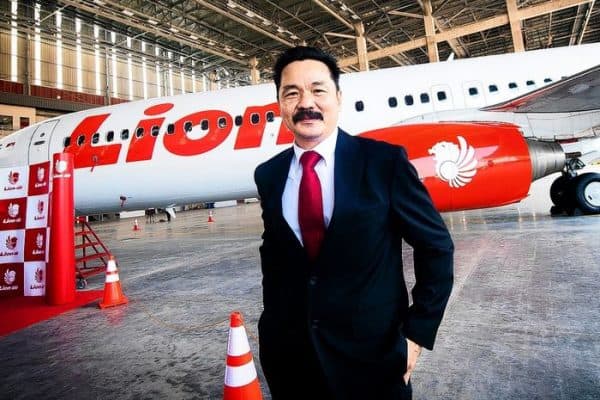
The sheer audacity of Lion Air’s business strategy is perfectly encapsulated in the words of its founder, Rusdi Kirana. Rather than offering excuses for poor service, he famously embraced the airline’s reputation with a startling level of honesty:
“My airline is the worst in the world, but you have no choice.”
This isn’t just a random comment; it is a public acknowledgment of their market dominance. By openly stating that passengers lack alternatives, Kirana confirms that Lion Air’s “poor service” isn’t a failure—it is a calculated part of a business model designed for a market where price and availability are the only real battlegrounds.

In the end, Lion Air lives up to its name as the “Lion King” of the skies—not through quality, but through unbeatable convenience, low prices, and a lack of alternatives. It has evolved from a mere airline into a piece of essential infrastructure woven into the daily lives of Indonesians.
The Lion Air paradox can be summarized in three points:
Low Customer Satisfaction vs. High Passenger Volume
Poor Complaint Handling vs. Zero Effective Competition
Low Brand Value vs. Consistent Profitability
This unique structure is a phenomenon born from the “Price-First” culture of a developing nation and the structural gaps in the aviation industry. Perhaps we, as outsiders, still have much to learn about how business and consumer mindsets work in rapidly developing markets like Indonesia.
As someone who frequently travels for business within Indonesia, I still feel the stress of Lion Air’s subpar service. However, I have to admit: Lion Air has taught me more about the reality of Indonesian business than any textbook ever could. So, Lion Air… thank you for the lessons (and for getting me there, eventually).
The Lion Air Group is an Indonesian-based private aviation conglomerate that dominates the regional market. The group operates a diverse portfolio of airlines, ranging from ultra-low-cost carriers (ULCC) to full-service providers.
Company Name: PT Lion Group
Founders: Rusdi Kirana and Kusnan Kirana
Established: November 15, 1999
Headquarters: Lion Air Tower, Jakarta, Indonesia
Founded in 1999 by brothers Rusdi and Kusnan Kirana, Lion Air officially took to the skies on June 30, 2000. Launching with flights from Jakarta to Denpasar and Pontianak using a Boeing 737-200, it entered the market as Indonesia’s very first low-cost carrier.
As domestic demand surged, the group executed a brilliant multi-brand expansion strategy:
2003: Established Wings Air as a regional feeder to connect smaller, remote islands.
2012: Ventured into the international market with Malindo Air (now Batik Air Malaysia).
2013: Launched Batik Air, a full-service carrier designed to compete directly with the premium giant, Garuda Indonesia.
2013: Expanded further into Southeast Asia with the founding of Thai Lion Air.
2021: Introduced Super Air Jet, a modern LCC specifically targeting the millennial and Gen Z travel boom.
The Lion Air Group is legendary in the aviation industry for its aggressive fleet investment. They made global headlines twice by placing the largest orders in commercial history at the time:
The Boeing Deal (2011): An order for 230 aircraft (including 201 Boeing 737 MAXs) valued at $21.7 billion.
The Airbus Deal (2013): A massive contract for 234 A320 series aircraft totaling $24 billion.
These bold moves accelerated their growth, transforming a small startup into a titan that now dictates the pace of aviation across Southeast Asia.
For business in Indonesia, choose Timedoor, celebrating its 10th anniversary.
System development, IT education services, Japanese language education and personnel dispatch services, business expansion support services.

some other blog posts you might be interested in

