July 2, 2024 • Berita
March 6, 2025 • Business, Berita • by Erika Okada
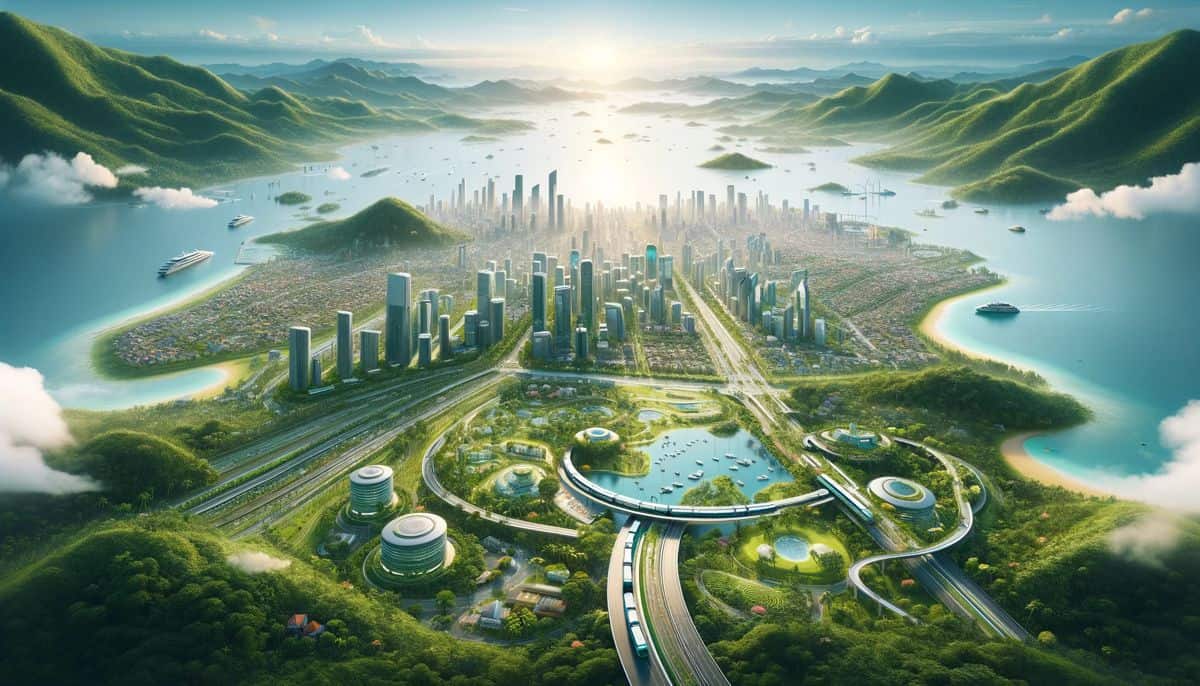
Table of Contents
In 2024, Indonesia officially began relocating its capital from Jakarta to Nusantara, commonly known as IKN (Ibu Kota Nusantara). Moving the seat of government for a nation of 280 million people is a massive, historic undertaking. In this article, we provide an in-depth look at everything you need to know about Indonesia’s new capital, Nusantara.
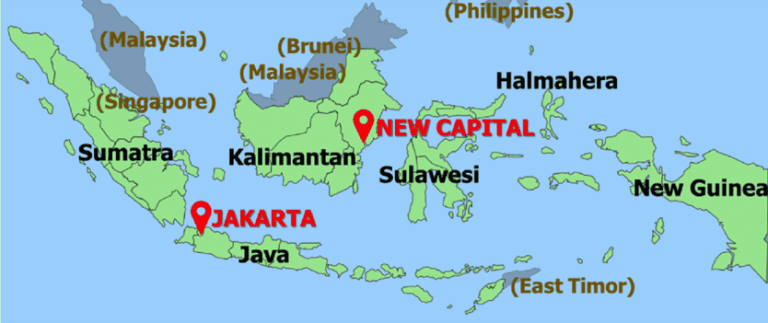
The location of Indonesia’s New Capital Nusantara was strategically chosen to be the new heart of the archipelago. Here are the geographical details:
Island: East Kalimantan (the Indonesian portion of Borneo Island).
Regencies: The site spans across two regencies—Kutai Kartanegara and North Penajam Paser.
Proximity: It is located approximately 30 km north-northwest of Balikpapan, a major port city and economic hub in the region.
Geographic Center: Its central position makes it more accessible to the eastern and western parts of Indonesia, promoting national unity.
Disaster Safety: Unlike Java or Sumatra, East Kalimantan has a significantly lower risk of earthquakes and volcanic activity, as it sits outside the Pacific “Ring of Fire.”
Nature & Biodiversity: The area is surrounded by lush tropical rainforests, offering a rich ecosystem that the “Forest City” concept aims to preserve.
The decision by the Indonesian government to relocate the capital from Jakarta to Nusantara is driven by several critical factors:
Overpopulation and Traffic Congestion: As a megacity with over 10 million residents, Jakarta suffers from chronic traffic gridlock that impacts daily productivity and the economy.
Land Subsidence and Flooding: Due to excessive groundwater extraction and infrastructure gaps, Jakarta is sinking. This land subsidence has significantly increased the risk of catastrophic flooding.
Balancing National Development: Historically, Indonesia’s population and economic activities have been overly concentrated on Java Island. Relocating to East Kalimantan aims to shift the focus and promote growth across the entire archipelago.
Creating a New Economic Hub: By establishing Nusantara as a center for innovation and business, the government aims to attract new investments and create jobs, boosting national economic growth.
Eco-Friendly Urban Development: Unlike the industrial sprawl of old cities, Nusantara is designed from the ground up as a Smart City. It focuses on renewable energy, cutting-edge technology, and sustainable urban management to achieve a carbon-neutral future.
This relocation is not just a change of address; it is a core part of Indonesia’s long-term National Development Strategy for a more resilient and balanced future.
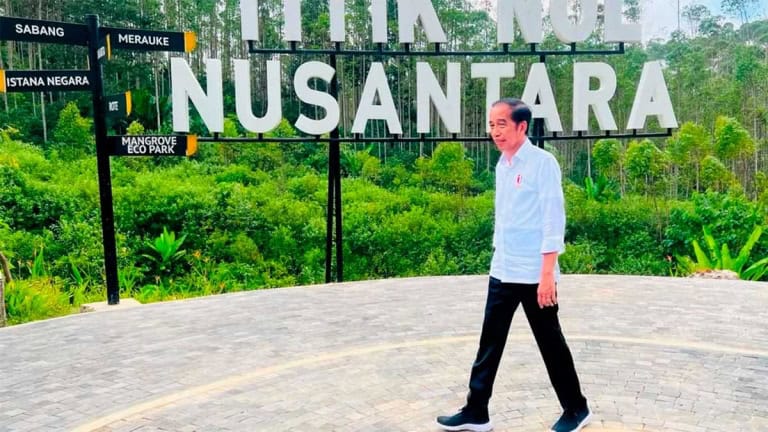
The relocation of Indonesia’s capital to Nusantara was spearheaded by the 7th President of Indonesia, Joko Widodo, popularly known as Jokowi. While the idea of moving the capital had been discussed since the era of the first president, Sukarno, it was President Jokowi who finally turned the vision into a concrete national project.
The timeline of this mega-project reflects the rapid pace of the administration:
August 26, 2019: President Jokowi officially announced the plan to relocate the capital.
January 18, 2022: The Indonesian Parliament (DPR) passed the New Capital City Law (UU IKN), officially naming the city Nusantara.
March 9, 2022: A groundbreaking ceremony was held, marking the formal start of construction.
August 17, 2024: For the first time, Indonesia’s Independence Day was celebrated on-site in Nusantara, symbolizing a new era for the nation.
In his 2019 state address, President Jokowi emphasized that Indonesia’s New Capital Nusantara is not just about moving buildings; it is a symbol of national identity and progress.
“The new capital is not only a symbol of our identity but also a representation of the nation’s progress. It is designed to be a modern, smart, and green city powered by renewable energy.” — President Joko Widodo
On his social media, the President further explained that moving the capital is a vital necessity for Indonesia’s long-term survival, fulfilling a dream that had been deferred since the post-independence era. He appealed to the public to see this as a step toward a more equitable and advanced Indonesia.
The success of Indonesia’s New Capital Nusantara relies on a dedicated team of leaders and institutions. Here are the primary figures driving the project:
Joko Widodo (Jokowi): The 7th President of Indonesia and the visionary behind the relocation. He is the main proponent who transformed the decades-old idea into an active national agenda.
Basuki Hadimuljono: The Minister of Public Works and Public Housing. Often called the “Commander of Infrastructure,” he is responsible for the physical urban planning and the rapid construction of IKN.
Bambang Susantono: The first Chairman of the Nusantara Capital City Authority (Otorita IKN). With his background in transportation and infrastructure, he was tasked with the early-stage governance of the new city.
Dhony Rahajoe: The former Vice Chairman of the Nusantara Capital City Authority, who played a crucial role in the execution and operational development of the project.
The House of Representatives (DPR): The legislative body that provided the legal foundation by passing the IKN Law (UU IKN) in 2022, officially authorizing the project and its funding.
Indonesia’s New Capital Nusantara is being developed under a master plan that harmoniously blends sustainability with advanced technology. Here are the five core pillars that define its urban landscape:
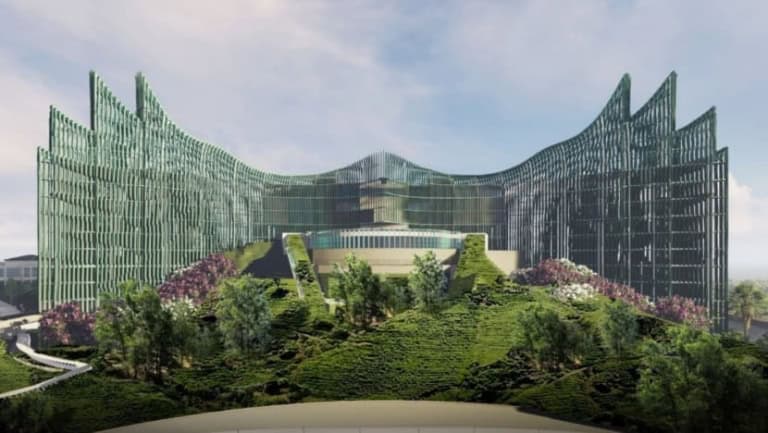
Nusantara prioritizes environmental preservation with the goal of achieving carbon neutrality. A major highlight is the construction of a 50-megawatt solar power plant, which serves as the backbone for the city’s renewable energy supply. Every building is designed to adhere to green building standards to minimize energy waste.
By leveraging the latest Information and Communication Technology (ICT), Nusantara aims to enhance urban efficiency and quality of life. The smart city framework includes:
Smart Traffic Management: To reduce congestion and optimize travel time.
Energy Optimization: Utilizing smart grids to manage power consumption.
Disaster Mitigation Systems: Advanced early-warning technology to ensure citizen safety.
Nusantara is designed to harmonize with the lush tropical environment of Kalimantan. The plan allocates vast areas for green belts and urban parks, ensuring the protection of local biodiversity while providing residents with accessible recreational spaces.
As the melting pot for Indonesia’s 280 million citizens, the city’s design includes cultural hubs and community spaces. These areas are dedicated to celebrating the diverse cultural backgrounds of Indonesia, fostering social inclusion and a unified national identity.
The city emphasizes sustainable mobility through an efficient, interconnected transit network.
Public Transit Focus: High-capacity electric public transportation.
Active Mobility: Extensive networks of pedestrian walkways and dedicated bicycle lanes to promote a healthy, low-carbon lifestyle.
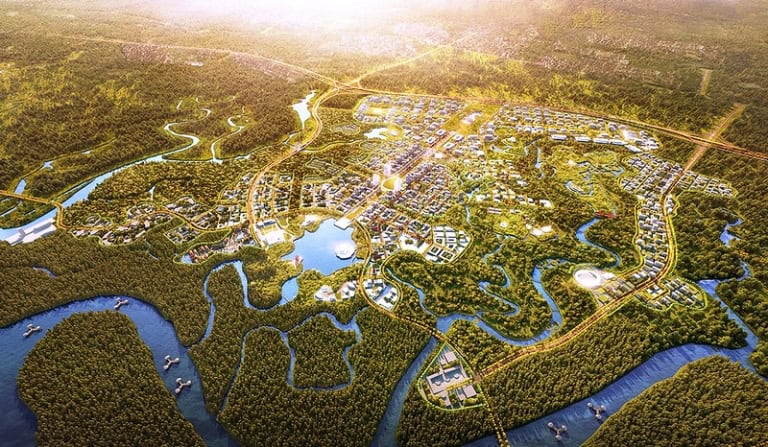
The relocation to Indonesia’s new capital, Nusantara, officially commenced in 2022 and is being executed in strategic phases. Below is a detailed look at the current status of the project and its roadmap for the coming years.
As of late 2024, the development of Nusantara has reached several key milestones, despite facing various logistical challenges:
Construction of Key Government Facilities: By October 2024, the Presidential Palace and several residences for high-ranking government officials were completed. Critical infrastructure, including toll roads and the new airport, remains under active construction to ensure seamless connectivity.
First Independence Day Ceremony: On August 17, 2024, Nusantara hosted its inaugural Independence Day celebration. However, due to construction delays and limited facilities, the event was scaled down, and invitations for foreign dignitaries were postponed.
Entry of Private and Foreign Investment: September 2024 marked a significant turning point with the first major entry of international investors. China’s Delonix Group (hospitality) and the Australian Independent School (AIS) officially broke ground on projects for hotels and international education facilities, signaling growing global confidence in the project.
President Prabowo Subianto has outlined a strategic vision to ensure the continuity of the Nusantara project. Despite various challenges, the government remains committed to the following roadmap:
Significant Budget Allocation: For the 2025–2029 period, the administration has earmarked approximately 48.8 trillion IDR (approx. $3 billion USD) for continued construction. This funding is dedicated to maintaining the momentum of the city’s physical development.
Completion of Core Infrastructure: The priority for the next four years is to finish the central government district, including the Legislative and Judicial buildings. The ultimate goal is to host the 2029 Presidential Inauguration in Nusantara, marking the city’s full operational status.
Aggressive Private Investment Drive: To reduce reliance on the state budget (APBN), the government is implementing new incentives to attract private and foreign investors. This is seen as the primary engine to accelerate the development of commercial areas, housing, and entertainment hubs.
Current Outlook: While the project faces logistical delays and funding scrutiny, the executive branch’s focus remains steadfast. The transition is no longer just about moving offices, but about building the foundation of Indonesia’s 2045 “Golden Era” vision.
Recent policy shifts have raised questions about the speed of the capital’s development. On January 22, 2025, President Prabowo Subianto issued Presidential Instruction No. 1, ordering a comprehensive review of national and regional budgets to improve fiscal efficiency.
The goal of this instruction is to reallocate approximately 306 trillion IDR (approx. $20 billion USD) by cutting non-essential spending, such as ceremonial events and official travel expenses.
The primary driver behind this massive budget reshuffle is one of the President’s key campaign promises: the Free School Meals Program.
The Expansion: The program’s target has been scaled up from 17 million to 82.9 million beneficiaries.
The Cost: This expansion requires an additional 100 trillion IDR, forcing the government to prioritize social welfare over some infrastructure projects.
As part of this efficiency drive, the budget for Nusantara has come under scrutiny:
Significant Reduction: In the 2025 state budget, funding for Nusantara was reduced by 65% compared to the previous year.
Design Re-evaluation: President Prabowo has ordered a review of the designs for the Legislative and Judicial buildings. While officials state this is to align with the President’s personal preferences rather than just cost-cutting, it inevitably points toward potential construction delays.
Despite these adjustments, President Prabowo has clarified that he does not intend to cancel the relocation. He remains committed to the project and aims to officially begin working from Nusantara by August 2028.
The relocation of Indonesia’s capital has sparked a wide range of perspectives from both the public and urban planning experts. Below is a summary of the primary arguments for and against the project:
Correcting Economic Inequality: By shifting the administrative center, the government aims to reduce the heavy concentration of wealth and population on Java Island, fostering more balanced growth across other provinces.
Alleviating Jakarta’s Crisis: Relocating government functions is expected to ease Jakarta’s chronic issues, including extreme traffic congestion, severe air pollution, and the alarming rate of land subsidence.
A Blueprint for Future Cities: Nusantara is envisioned as a global model for sustainability. Its reliance on renewable energy and smart-city technology offers a glimpse into the future of eco-friendly urban living.
Environmental Impact and Biodiversity Loss: Borneo is a global biodiversity hotspot. Experts worry that massive construction leads to deforestation and the destruction of critical habitats for endangered wildlife, such as orangutans.
Fiscal Burden and Economic Risk: The astronomical cost of the project raises concerns about national debt and the potential diversion of funds from essential social programs like healthcare and education.
The “Jakarta Neglect” Fear: Critics argue that moving the capital is a “Band-Aid solution” that fails to address Jakarta’s core problems, potentially leaving the old capital to sink and struggle without adequate resources.
Lack of Public Engagement: There are ongoing concerns regarding transparency. Many feel that the voices of local indigenous communities and the general public have not been sufficiently integrated into the planning process.
Given these diverse viewpoints, the Indonesian government faces the challenge of ensuring transparent communication and active citizen participation. For Nusantara to be truly successful, it must not only be a “Smart City” but also an inclusive and sustainable capital that benefits all Indonesians.
Indonesia has embarked on a historic journey to relocate its capital from Jakarta to Nusantara (IKN). This decision aims to resolve Jakarta’s deep-rooted urban crises—such as overpopulation and severe land subsidence—while fostering balanced economic growth across the archipelago.
Located in East Kalimantan on the island of Borneo, Nusantara is envisioned as a sustainable, tech-forward Smart City. Initiated by former President Joko Widodo in 2022, the city hosted its first Independence Day celebration in 2024. Currently, under the administration of President Prabowo Subianto, construction is focused on key government districts, with the ambitious goal of holding the 2029 Presidential Inauguration in the new capital.
Nusantara: Derived from Old Javanese, meaning “harmony and cooperation between the islands.” It was chosen as the name of the new capital to symbolize national unity.
Kalimantan: The Indonesian portion of Borneo. Nusantara is strategically located in the eastern part of this island, chosen for its stability and central location.
Joko Widodo (Jokowi): The 7th President of Indonesia and the primary architect behind the capital relocation project.
Prabowo Subianto: The current President of Indonesia, who is continuing the development of Nusantara with a focus on fiscal efficiency.
Smart City: An urban area that uses Information and Communication Technology (ICT) to enhance operational efficiency, improve the quality of government services, and promote sustainable development.
Q: Why is Indonesia moving its capital?
A: The relocation aims to alleviate Jakarta’s severe urban challenges, including overpopulation, chronic traffic congestion, and rapid land subsidence. Additionally, it serves to promote more balanced economic development across the entire Indonesian archipelago.
Q: Where exactly is Nusantara located?
A: Nusantara is located in East Kalimantan on the island of Borneo (Kalimantan). It is strategically positioned between the regencies of Kutai Kartanegara and North Penajam Paser.
Q: What are the key features of Nusantara?
A: The city is designed as a sustainable Smart City. Its core features include eco-friendly urban planning, the integration of advanced ICT (Information and Communication Technology), harmony with tropical nature, the promotion of multiculturalism, and highly efficient public transportation infrastructure.
Q: What is the current status of the project?
A: Construction officially began in 2022. The city successfully hosted its first Independence Day ceremony in 2024. Currently, major government facilities are under construction, with the goal of hosting the next Presidential Inauguration in 2029.
Q: What are the public and expert opinions on the move?
A: Opinions are divided. Supporters highlight the benefits of reducing economic inequality and creating a sustainable urban model. On the other hand, critics express concerns regarding potential environmental destruction, the significant fiscal burden on the national budget, and the loss of biodiversity.
For business in Indonesia, choose Timedoor, celebrating its 10th anniversary.
System development, IT education services, Japanese language education and personnel dispatch services, business expansion support services.

some other blog posts you might be interested in